


Horse Health
Stifle Support for Horses
How the stifle works, and how to build a stronger hind end.
- 4.93 from 5,590 reviews
- Free US shipping on subscriptions
- 30-day returns, even opened tubs
The stifle is your horse’s biggest joint, roughly his version of our knee, and it does a lot of the work every time he pushes off from behind. Most stifle-friendly care happens in the arena, through steady conditioning. Joint & Recovery and Lean Muscle back that up with daily support for joint comfort, mobility and the muscle around the joint.
Key points
- The stifle is your horse's biggest joint and does much of the work behind.
- Hind-end strength matters most, so hill work, poles and backing up all help.
- A catching hind leg, stiff steps or swelling behind all deserve a vet check.
- Joint & Recovery and Lean Muscle support joint comfort and muscle while you build his fitness.

How the stifle works
The stifle sits high on the hind leg, just in front of the flank. The kneecap (patella) rides in a groove at the bottom of the thigh bone, held in place by three patellar ligaments and the big quadriceps muscles above.
Horses have a clever locking setup here that lets them doze standing up. When the muscles holding that system aren’t fit or strong enough, the kneecap can catch for a moment when the horse moves off. That’s why vets so often talk about hind-end fitness when the stifle comes up.
Signs worth a closer look
- A hind leg that catches or drags for a stride as he moves off, especially after standing
- Reluctance going downhill or backing up
- Short, stiff steps behind, or trouble picking up a canter lead
- A clicking or popping sound from the hind end
- Swelling or heat at the front of the stifle
Any lameness, heat or swelling needs your vet, not a supplement. Stifle trouble can look a lot like hock or back trouble, and only a proper workup can tell them apart.
Formula Finder
Not sure which formula fits?
Answer a few quick questions in the Formula Finder and we’ll suggest a starting point.

Building a stronger hind end
Strength in the quadriceps and the rest of the hind end helps keep the stifle working the way it should. Your vet or trainer can help you build a plan, and it usually includes some of these:
- Hill work. Walking up and down gentle slopes, adding time over a few weeks.
- Poles. Trot poles and raised cavalletti ask the hind legs to lift and push.
- Backing up. A few slow, straight steps at a time.
- Regular turnout. Moving around all day beats standing in a stall.
- Consistency. Short, regular sessions build more than the odd long ride.
Keep an eye on weight and condition too. Topline and hind-end muscle are part of the same picture.
Where our stifle supplements fit
These two formulas back up the conditioning work. They don’t replace it.
ImmuBiome Joint & Recovery combines King Trumpet, Antrodia, Lion’s Mane, Reishi and two Cordyceps species with bovine colostrum and probiotics. It supports joint mobility and flexibility, healthy connective tissue and normal recovery after work.
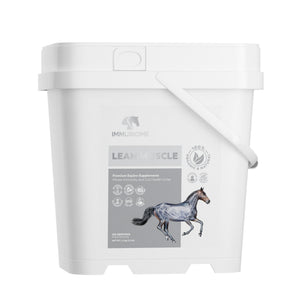
ImmuBiome Lean Muscle leads our line on colostrum at 8,750 mg, with Reishi and probiotics alongside. It supports healthy muscle development and a stronger topline, which suits horses who need more behind. Strength & Stamina adds 3,000 mg of colostrum with Cordyceps, King Trumpet and Lion’s Mane for stamina and muscle. If your vet finds his back is part of the picture, Spine & Nerve shares Joint & Recovery’s six mushrooms with a Lion’s Mane focus.
Joint & Recovery and Spine & Nerve sit together in our bone and joint support collection.
Stifle questions owners ask
Can a supplement help a locking stifle?
No supplement can unlock or fix a stifle. If your vet has diagnosed a catching or locking stifle, the usual focus is fitness work, sometimes with other steps your vet recommends. Joint & Recovery and Lean Muscle can support muscle and joint comfort alongside that plan.
What exercises are good for a horse’s stifles?
Hill work at the walk, trot poles, raised cavalletti and slow backing up are common choices. Start small and build over weeks, with your vet’s or trainer’s input.
Why does my horse’s stifle seem worse after time off?
Hind-end muscle fades quickly when a horse stands around. That’s why stifle problems often show up after stall rest or a long break, and why steady turnout and a gradual return to work help.
Is stifle trouble more common in young horses?
It shows up more in young, growing horses, horses built straight behind and horses that have lost fitness. Your vet can tell you whether your horse’s build is part of the picture.
How long before I see a difference in my horse’s hind end?
Muscle takes time. Most owners give a conditioning program and Joint & Recovery or Lean Muscle at least six to eight weeks before judging the change in strength behind.
Shop hind-end support
Daily support for the hind end
Every formula ships free on subscription, and you can return any tub within 30 days, even opened.
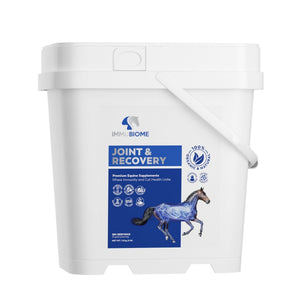
Joint & Recovery
4.94 (315)
From $69
Mushrooms, colostrum and probiotics for joint mobility, connective tissue and recovery from normal work.
More ImmuBiome formulas
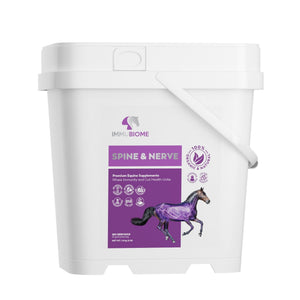
Spine & Nerve
4.9 (1273)
From $69
Lion’s Mane plus five more mushrooms for daily spine and nerve support.
Breathe
4.9 (545)
From $69
Cordyceps, Reishi and Chaga for healthy airways in dust and pollen season.
Strength & Stamina
4.96 (358)
From $69
Cordyceps, King Trumpet and colostrum for hooves, coat and stamina.
Keep reading

Colostrum
Where our first-day colostrum comes from, and how much is in each formula.
Read more
Mushroom Species
The seven species we use, and which formula each one is in.
Read more
PSSM in Horses: Signs, Diet and Vet Care Basics
Another reason a horse can feel weak behind.
Read the articleThis page is for general information and isn’t a substitute for advice from your veterinarian. These statements have not been evaluated by the FDA. Our products are not intended to diagnose, treat, cure or prevent any disease.
