


Horse Health
PSSM in Horses: Signs, Feeding and Muscle Support
What owners notice, how vets confirm it, and the daily routine that helps a PSSM horse feel his best.
- 4.93 from 5,598 reviews
- Free US shipping on subscriptions
- 30-day returns, even opened tubs
If your vet has diagnosed PSSM, or mentioned it as a possibility, you’re in good company. Polysaccharide storage myopathy is one of the most common muscle conditions in horses, and plenty of PSSM horses go on to enjoy steady work and a happy life. Day-to-day care comes down to a few things your vet will walk you through: low-starch feeding, daily movement and patience. Lean Muscle and Strength & Stamina can sit alongside that plan to support muscle tone and topline while he rebuilds.
Key points
- PSSM is a genetic muscle condition that changes how muscle stores sugar.
- Stiffness, sweating or reluctance early in a ride are common signs, and tying up always needs your vet.
- Most plans focus on low-starch feeding, calories from fat and fiber, and daily turnout and movement.
- Lean Muscle and Strength & Stamina support muscle tone and topline. They don't treat PSSM.

What PSSM is
PSSM stands for polysaccharide storage myopathy. In a horse with PSSM, the muscles store more sugar (glycogen) than they should, along with an abnormal form of it. That makes it harder for his muscles to use energy smoothly once he starts working.
There are two main types. Type 1 is linked to a known gene and can be confirmed with a DNA test from a hair or blood sample. It turns up most often in Quarter Horses, Paints, Appaloosas and some draft breeds. Type 2 has no single gene test yet and is usually confirmed with a muscle biopsy. It’s seen in Warmbloods and Quarter Horse types, among others.
PSSM symptoms owners notice
- Stiffness or a short, choppy stride in the first part of a ride
- Reluctance to go forward, or seeming lazy behind
- Sweating, trembling or a hard, tight hindquarter after light work
- Tying up: cramping, pawing, stretching out or not wanting to move
- Dark, coffee-colored urine after an episode
- Loss of topline or muscle over the back and hindquarters
Early signs are easy to mistake for laziness or a sore back. If he ties up or won’t move, stop, keep him still and call your vet. Only your vet can confirm PSSM and rule out other causes.
Formula Finder
Not sure which formula fits?
Answer a few quick questions in the Formula Finder and we’ll suggest a starting point.

Feeding and exercise for a PSSM horse
Your vet or equine nutritionist will tailor a plan to your horse. Most start with the same building blocks:
- Keep starch and sugar low. Skip sweet feed and molasses, and choose lower-sugar hay. Soaking hay is one option your nutritionist may suggest.
- Calories from fat and fiber. Beet pulp and vet-approved fat sources can keep weight on without the sugar.
- Move every day. As much turnout as you can manage, plus short, regular work. Long stretches in a stall tend to make things harder.
- Build back slowly. After time off, add work a little at a time, starting with walking.
- Stay consistent. Same routine, same feed, small changes only.
Most owners give a new routine a few months before judging how their horse is doing.
Where our muscle supplements fit
Every ImmuBiome formula is made with no added sugar or molasses, so it slots easily into a low-starch plan. Our supplements support the routine your vet sets. They don’t replace it, and they don’t treat PSSM.
ImmuBiome Lean Muscle is built around first-day bovine colostrum with Reishi mushroom, probiotics and prebiotics. It supports healthy muscle development and a stronger topline, which is often what owners are after while a PSSM horse rebuilds condition.
ImmuBiome Strength & Stamina pairs Cordyceps and King Trumpet mushrooms with colostrum to support stamina, strength and healthy connective tissue in horses back in regular work.
Not sure which suits your horse? Lean Muscle or Strength & Stamina walks through the difference, or browse all our muscle supplements for horses.
PSSM questions owners ask
What are the early symptoms of PSSM in horses?
Many owners first notice stiffness, a short stride or reluctance to go forward in the first 10 to 20 minutes of work, often after time off. Sweating, a firm hindquarter or mild cramping can follow. Mild cases can look a lot like laziness, so mention the pattern to your vet if it keeps showing up.
How is PSSM diagnosed?
Your vet will look at your horse’s history, an exam and bloodwork for muscle enzymes. Type 1 PSSM can be confirmed with a genetic test from a hair or blood sample. Type 2 usually needs a muscle biopsy.
What should I feed a horse with PSSM?
Most plans keep starch and sugar low, build the diet around forage and add calories from fat and fiber rather than grain. Your vet or nutritionist will tailor the details to your horse’s weight and workload.
Can a supplement fix PSSM?
No. PSSM is genetic, and no supplement can treat or cure it. Feeding and exercise lead the way. Lean Muscle and Strength & Stamina can support muscle tone, topline and stamina alongside the plan your vet sets.
Do ImmuBiome supplements contain sugar or molasses?
No. Our formulas have no added sugar or molasses, so they fit easily into a low-starch feeding plan. Mix into damp feed as the label directs.
Can a horse with PSSM still be ridden and shown?
Many are. With a steady routine, daily turnout and a gradual return to work, plenty of PSSM horses go on to ride, show and hack out. Your vet can help you set realistic goals for your horse.
Shop muscle support
Daily support for muscle and topline
Every formula ships free on subscription, and you can return any tub within 30 days, even opened.
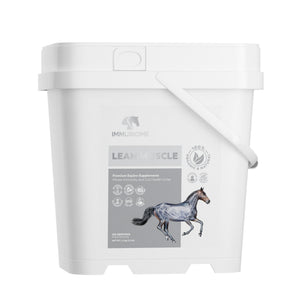
Lean Muscle
4.95 (892)
From $134
Colostrum-first support for topline and lean muscle, with no added sugar or molasses.
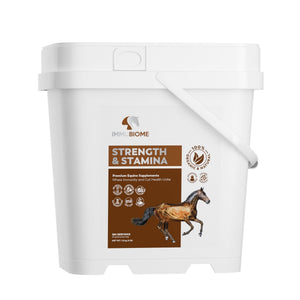
Strength & Stamina
4.96 (359)
From $69
Cordyceps, King Trumpet and colostrum to support stamina, strength and connective tissue.
More ImmuBiome formulas
Spine & Nerve
4.9 (1276)
From $69
Lion’s Mane plus five more mushrooms for daily spine and nerve support.
Breathe
4.91 (545)
From $69
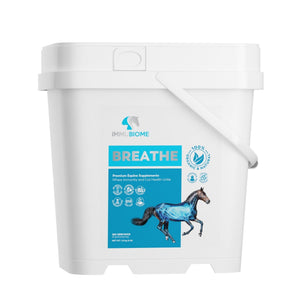
Cordyceps, Reishi and Chaga for healthy airways in dust and pollen season.
Keep reading

PSSM in Horses: Signs, Diet and Vet Care Basics
Our longer read on PSSM types, diagnosis and diet.
Read the article
Lean Muscle or Strength & Stamina: Topline or Go-the-Distance?
Topline or go-the-distance? How the two formulas differ.
Read more
Stifle Support for Horses
Hind-end strength, stifle care and the exercises that help.
Read moreThis page is for general information and isn’t a substitute for advice from your veterinarian. These statements have not been evaluated by the FDA. Our products are not intended to diagnose, treat, cure or prevent any disease.
